the cost OF INFRASTRUCTURE complexity.
why simplifying digital infrastructure accelerates enterprise growth
Enterprises face increasing pressure to transform their digital infrastructure in order to meet the demands of today's changing technological landscape.

COMPLEXITY IS NOW MORE THAN JUST AN IT ISSUE - ITS A STRATEGIC PROBLEM.
FINANCIAL IMPACT:
Annually, companies are prevented from from carrying out 14 innovation initiatives due at least in part to digital infrastructure complexity, valued at an average of €508,000.
On average, organisations experienced seven weeks of cumulative delay last year due to infrastructure complexity, with more than €140,000 of value at stake each week.
The pressure of complexity is most visible in three areas: AI adoption and Innovation, security, and operational efficiency.
Across each of these, the pattern is the same. The more layered the estate becomes, the harder it is for organisations to move with confidence. Businesses become less competitive and ambitious when digital infrastructure becomes too complicated to change confidently.
Our report asks 600 senior decision-makers across Japan, the UK, France, Germany and the Netherlands their thoughts on how their organisations are handling the complexity of their digital infrastructure.
73%
OF ENTERPRISES WOULD CONSIDER AN EXTERNAL REVIEW TO ASSIST THEM IN THEIR TRANSFORMATION PROCESS
91%
say complexity holds back their ability to embrace emerging technologies
68%
agree that complexity is now a bigger barrier to growth than a lack of funding or ideas
1. complexity stalls ai ambition
Organisations are not short of ideas, and many are alreayd investing in advanced analytics, automation and AI-enabled services. The problem is that these initiatives often have to run across estates that were not designed to support fast, joined-up experimentation at scale.

2. complexity weakens security
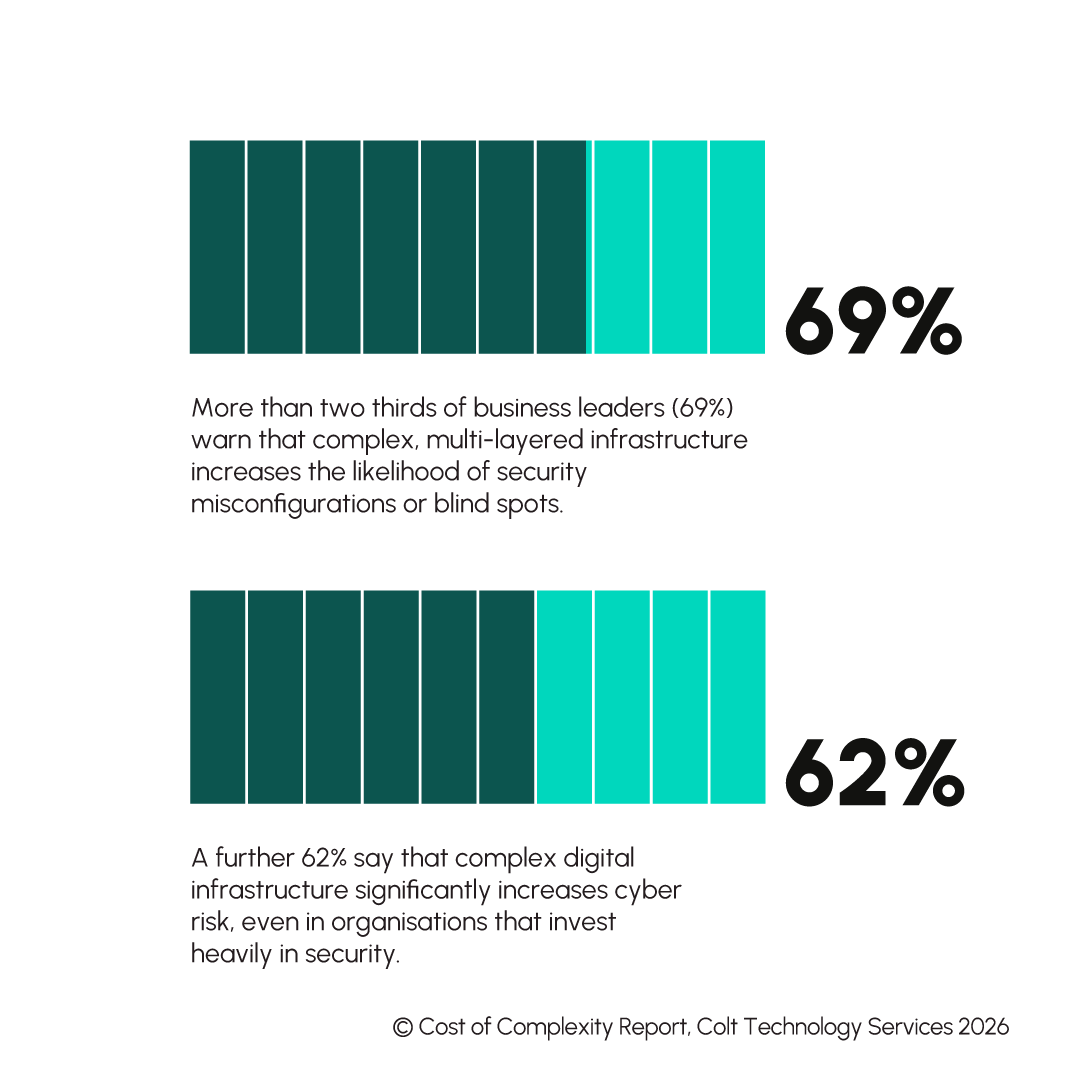
Multi-layered digital infrastructure makes it harder to see, secure and govern the whole estate. This matters because risk does not stay inside IT - it quickly becomes an executive, regulatory and reputational concern.
3. complexity erodes efficiency
Daily operations become slower when employees have to work around fragmented systems, multiple portals, duplicated processes and unclear ownership models.
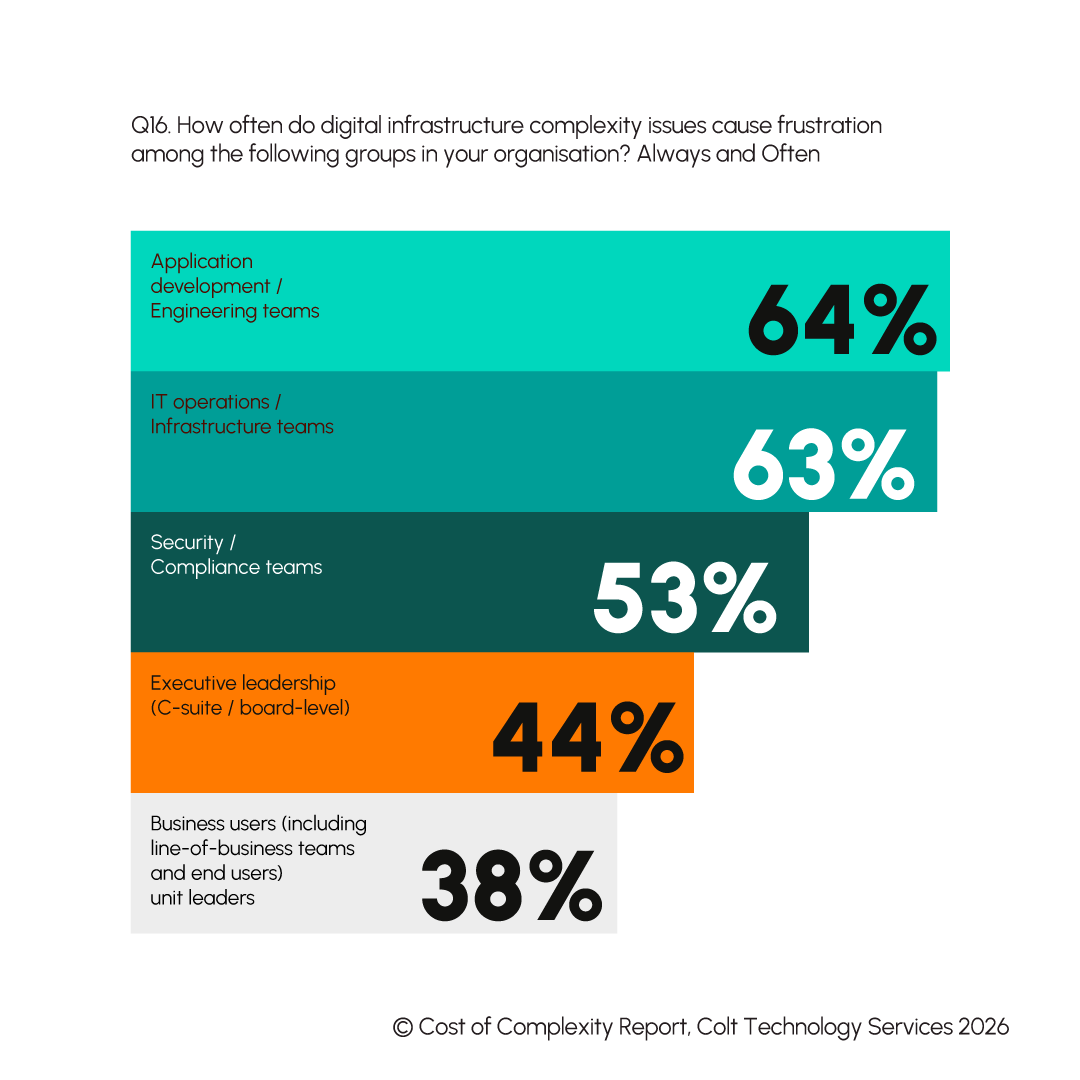
This cost is not only financial. It shows up in the time teams spend coordinating, troubleshooting and explaining risk, instead of delivering planned work.

SIMPLIFICATION AS A DESIGN PRINCIPLE
The practical response to complexity is not to pause transformation until the estate is perfect.
Simplification is not about slowing innovation down. It is about making innovation repeatable, secure and scalable. The organisations that tackle complexity most effectively will be those that build simplification into every decision: fewer unnecessary tools, clearer ownership, stronger integration, better visibility and partners that reduce operational burden rather than add to it.
disconnected systems
The average enterprise relies on 16 different vendors, platforms or tools - with only 18% describing their systems as fully integrated.
eroded efficiency
48% of respondents report that when digital infrastructure is multi-layered, their teams spend more time firefighting than carrying out planned work.
technical debt
51% see complexity of legacy systems and technical debt as the main factor preventing their organisation from streamlining its digital infrastructure
the way forward
73% of respondents would consider an external review or strategy to simplify or optimise their digital infrastructure.
get started today


ABOUT THIS RESEARCH
In February and March 2026 Coleman Parkes surveyed 600 senior decision-makers with awareness of their company’s digital infrastructure across Japan, the UK, France, Germany and the Netherlands. Respondents worked in finance, manufacturing, professional services, retail, transport and defence organisations with at least 2,000 employees.
ABOUT COLEMAN PARKES
Coleman Parkes is a full-service B2B market research agency specialising in IT/technology studies, targeting senior decision makers in SMB to large enterprises across multiple sectors globally.
Lo straordinario giornaliero.
Affrontando le complessità e le sfide quotidiane, semplifichiamo la routine, lasciando spazio allo straordinario.