environmental sustainability at colt
ESG by design shapes how we develop and provide our products and services and handle our impact on the environment. We work across our value chain to create a more sustainable future, supporting our suppliers and customers to improve their ESG performance.

Ambitious science-based targets





Our journey to net zero
In 2023, the SBTi approved our long-term net zero targets in accordance with the SBTi Net Zero Standard.
Our decarbonisation strategy focuses on improving energy efficiency, investing in renewable energy through renewable power certificates, and transforming supply chain practices as we continue to reduce our environmental impact and decrease our GHG emissions.
Our enhanced Decarbonisation Roadmap now incorporates Lumen EMEA into our Science-Based Targets. We partnered with Carbon Trust to define a clear path to our 2045 Net Zero ambition and identified six strategic decarbonisation levers, which are initiatives to cut emissions across our operations and value chain. We also completed a high-level financial analysis to understand the cost-effectiveness of these levers and guide the prioritisation of resources.
Following the GHG Protocol best practices and Colt Group’s rebaseline policy, we performed a comprehensive exercise to accurately account for our expanded operational footprint due to the acquisition of Lumen EMEA. In 2025, we engaged with the SBTi to communicate the increase in our emissions following the acquisition and to ensure that our SBTs are reflective of our current operation and structural changes.
47%
Absolute reduction in Scope 1+2 emissions by 2030 vs 2019
28%
Absolute reduction in Scope 3 emissions by 2030 vs 2019
90%
Absolute reduction in scope 1,2+3 by 2045 vs 2019
Our progress against our 2019 baseline
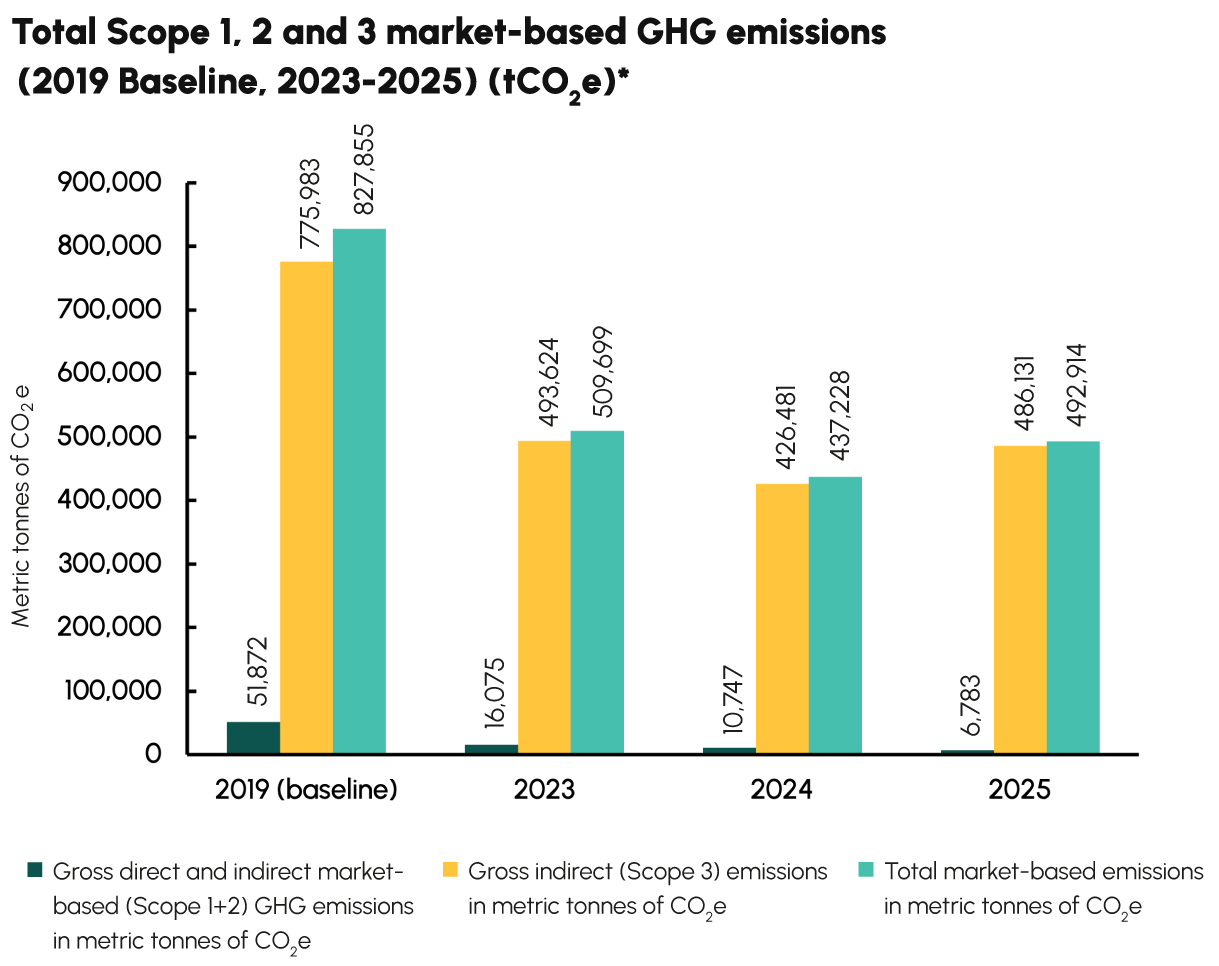
In 2025, Colt’s Group total market-based carbon footprint was 492,914 tonnes of CO2e, a reduction of 40% in emissions compared to our baseline year 2019.
Total GHG market-based emissions across Scope 1, 2 + 3 saw an increase of 13% from 2024 to 2025, reflecting higher activity across our value chain. Focus remains on our Scope 3 emissions (99% of our carbon footprint), reinforing the importance of working closely with our supplier and partners to drive further reductions.
Our achievements
EcoVadis platinum rating
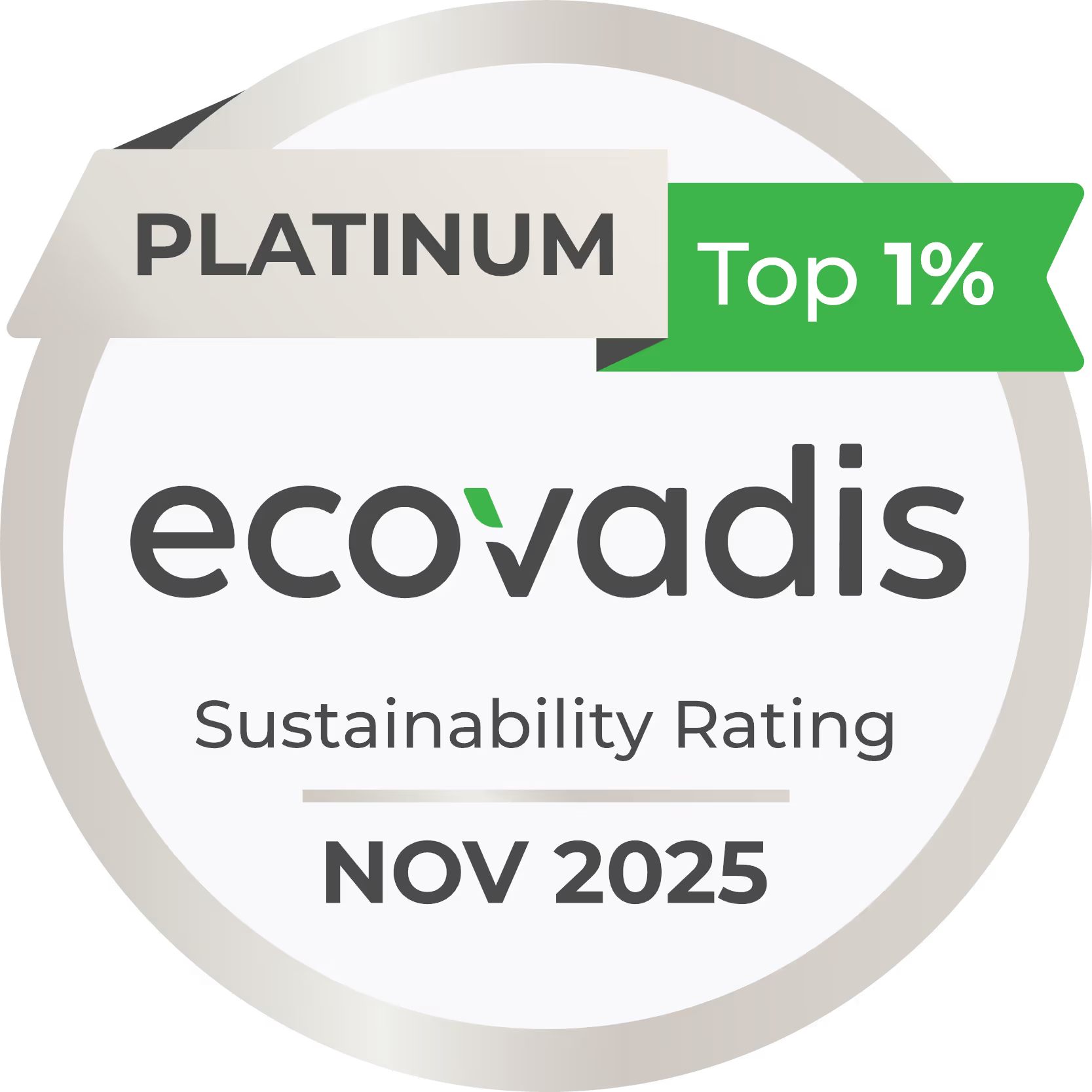
We complete an annual EcoVadis assessment across 21 sustainability criteria spanning Environment, Labor & Human Rights, Ethics and Sustainable Procurement.
In 2025, we earned a platinum medal with an 86/100 for the fourth year in a row, placing us in the top 1% globally.

CDP
We disclose our environmental impact through CDP, the global standard for environmental reporting, joining thousands of companies around the world who are committed to transparency and sustainability.
In 2025, we received an A- from CDP for our climate change disclosure, and for the fourth year in a row, we’ve been awarded an A in Supplier engagement assessment, acknowledging our outstanding performance for the third consecutive year.