
Glossary
Breaking down the technologies, terminologies and acroyms across telecommunications.



What is high bandwidth?
Bandwidth, typically measured in bits, kilobits, or megabits per second, is the rate at which data flows over the network. This is a measure of throughput (amount per second) rather than speed (distance traveled per second). A high bandwidth network generally can deliver more information than a low bandwidth network given the same amount of…
Read More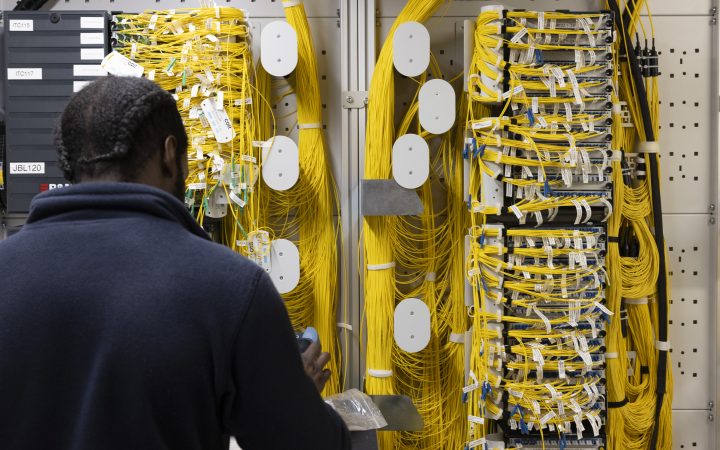
What is FIPS-certified?
The Federal Information Processing Standard 140-2 (or FIPS 140-2) is a cryptography standard that non-military U.S. federal agencies, as well as government contractors and service providers, must comply with in order to work with any federal government entities that collect, store, transfer, share and disseminate sensitive but unclassified (SBU) information. During FIPS certification, the file…
Read More
What is a Financial Extranet?
An extranet is a private network used by organisations to provide external partners and other trusted third parties with secure and controlled access to their internal applications, processes and information. Colt’s financial extranet, PrizmNet, connects exchanges and other providers of financial content (including market data, research and other services) to an ecosystem of over 10,000…
Read More
What is Ethernet?
Colt’s ethernet services create wide area/metropolitan area networks with LAN interface. Ethernet is the traditional technology for connecting devices in a wired local area network (LAN) or wide area network (WAN). It enables devices to communicate with one another via a protocol (a shared network language). Ethernet describes how network devices format and transmit data…
Read More
What is Encryption?
Encryption is a way of ‘scrambling’ data to ensure that only the right people, or devices, can understand the information. In simple terms, encryption converts easily readable plaintext into something incomprehensible, whic is known as ciphertext. A cryptographic key is a string of characters used within an encryption algorithm for altering data so that it…
Read More
What is Edge Compute?
Edge Computing transforms and replaces your legacy on-premise Customer Premise Equipment (CPE) into an intelligent and flexible Cloud platform, capable of hosting security and network services, distributed Cloud services and latency sensitive enterprise Edge applications. Edge Compute platforms are able to host multiple network services such as Router, Firewall, WAN optimisation and SD WAN as…
Read More
What is DWDM?
DWDM, or Dense Wavelength Division Multiplexing, has been a key technology evolution, as it allows multiple signals to run over a single strand of fibre, thus dramatically increasing the bandwidth potential of an individual network link. Today, multiple high-bandwidth services running at 10Gb/s, 40 Gb/s, and 100 Gb/s can be multiplexed onto a wavelength, and…
Read More
What is DDoS?
A distributed denial-of-service (DDoS) attack is a malicious attempt to disrupt the normal traffic of a targeted server, service or network by overwhelming the target or its surrounding infrastructure with a flood of Internet traffic. From a high level, a DDoS attack is like an unexpected traffic jam on a road, preventing regular traffic from…
Read More
What is Dark Fibre?
A dark or unlit fibre refers to a spare piece of network fibre that is in the ground. Digging fibre optic network routes is a huge investment so cables are often laid with significant additional capacity that can be leased to companies in the future. The customer is responsible for providing the necessary equipment and…
Read More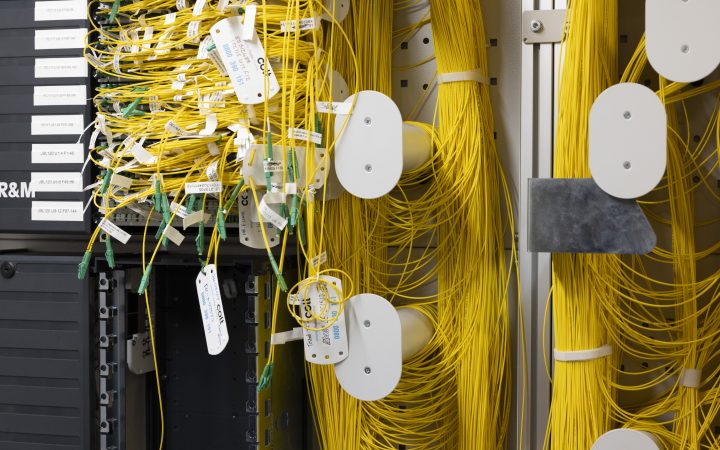
What is Cloud Prioritisation?
Colt Cloud Prioritisation combines the benefits of optimised routing and direct peering infrastructure with traffic prioritisation between customer router and provider edge router. Customers can reach Microsoft Teams, Office 365, Azure, Windows Virtual Desktop, or any other Microsoft SaaS application with a consistent and SLA-backed user experience. Cloud Prioritisation customers can decide how much of…
Read More
What is BYOC?
Bring your own Carrier (or BYOC) is a concept which has begun to gain more traction during the rise of collaboration platforms such as Microsoft Teams. As Microsoft’s own calling plans do not suit every business, they have introduced ‘Direct Routing’ as a way for companies to integrate their existing telephony vendors into their technology…
Read More
What are APIs?
APIs are mechanisms that enable two software components to communicate with one another, by using a set of definitions and protocols, essentially creating a common ‘language’. There are four ways that APIs can work depending on when or why they are created. These are SOAP (Simple Object Access Protocol), RPC (Remote Procedure Calls), Websocket &…
Read More- « Previous
- 1
- 2
- 3
- Next »